-: Hindu Temples :-
| Mahakaleswar | Bhimashankara | Kedarnath |
| Somnath | Mallikarjuna | Omkaresswar |
| Nagneswar | Trayembakeswar | Rameshwaram |
| Vaidyanath Jyotirlinga | Kashi Vishwanath | Grishneswar |
Nageswaram
12 Jyotirlingam of Lord Shankar
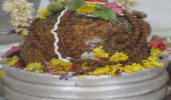 |
Nagesawaram is one of the 12 jyothirlingas of
Lord Siva. 'nagesam darukavane'[sivamahapuran kotirudra samhita 1/21-24]
It is believed to be the first sivalinga on earth.
Text says Nageswaram is in 'Darukavana', which is an ancient epic name of
forest in India. Darukavana finds mention in Indian epics like kamyakavana,
Dwaitavana, Dandakavana,etc.
According to legend, 'Balakhilyas', a group of dwarf sages worshipped SIVA
in darukavana for long time. To test their devotion& patience, SIVA came to
darukavana as an digmbara ascetic[nude] wearing only Nagas[serpants] in his
body. Wives of sages were attracted and ran after the ascetic, leaving back
their husbands. Sages got very disturbed and frustruated with this.They lost
their patience and cursed ascetic to loose his linga. Sivalinga fell on the
earth and whole world trempled.Brahma and VIshnu came to Siva, requested him
to save earth from destruction and take back his linga. Siva consoled them
and took back his linga.[Vamana purana CH.6th& 45th]
SIVA promised his divine presence in darukavana as 'jyothirlinga' for ever.
Later darukavana became favourate place of Nagas and Vasuki worshipped Siva
here for long and there after jyothirlinga came to be known as 'Nagnath/Nageswar'.
Also there is a story in Shiv Purana on jyotirlinga nageswaram. It says, a
demon named Daaruka attacked a Shiva devotee by name Supriya and imprisoned
her along with several others in his city of Daarukavana.This place was a
city of snakes and Daaruka was the king of the snakes. On the insistence of
Supriya, all the prisoners started to chant the holy mantra of Shiva and
instantly Lord Shiva appeared and vanquished the demon and later started to
reside here in the form of a Jyotirlinga.
At present, there is a debate on location of epic forest Darukavana so as to
identify the jyothirlinga of Nageswaram. Since no other important clues are
left in the text which help in locating the place,'darukavana' remains as
the vital clue.
Many SIVA temples across the country are claiming their shrine as Nageswara
and their location as darukavana. Out of these, three are most prominent.
1.Nageswara temple near Dwaraka, Gujarat
2.Jageswara temple near Almora, Uttarkhand
3.Nagnath Temple in Audha, Maharashtra
The very name of Darukavana in text is misread
as 'dwarakavana' by many at their own interest to locate jyothirlinga at
Nageswara temple at Dwaraka. In fact there is no legendary forest at this
part of dwaraka that finds mention in any of the india epics. In legends of
SriKrishna, we find mention of Somnath and adjoining Prabhas theerth, but
never there is any mention of 'Nageswara or Darukavana' in Dwaraka and
outskirts.
Darukavana is again misread as 'daruvana' [meaning deodar forest] by many to
locate it in almora. Deodar[daru vriksha] is found in western himalayas in
abundance and is not found in peninsular India. According to The ancient
treatise Prasadmandanam, Thus many identify 'Jageswara' temple in Almora,
Uttarkhand as Nageswara jyothirlinga.
But 'Darukavana' finds mention adjacent to Vindya Mountains in epics. It is
south-southwest of Vindyas extending to sea in west.
In dwadasa jyothirlinga sthothram, sri sankaracharya has praised
jyothirlinga as 'Naganath'.
"Yame sadanganagarethi ramye
vibhushithangam vividhaischabhogai
sathbhakthimukthipradameesamekam
srinaganatham saranam prapadye"
which clearly says that it is located south ['yame'] in the beautiful town
of 'sadanga'. 'sadanga' is the ancient name of Audh in Maharashtra and is
located 'south' compared to Jageswara shrine in Uttarkhand and Dwaraka
Nageswaram at West end.
This clearly shows that Nagnath Shrine at Audha [Parbhani Dist. Maharashtra]
is the real Nageswara Jyothirlinga and Darukavana is located south-west of
Vindhyas. Darukavana has nothing to do with Dwarakavana or Daruvana.
Nearest Rail Head is Parbhani Station on Manmad-Nanded line.