Gurus & Saints of India
The Sai Baba of Shirdi (c 1838 - 1918)
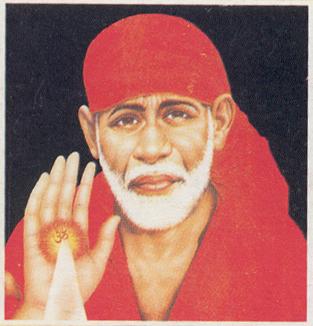
Sai Baba of Shirdi holds a unique place in the rich tradition of saints in India. Baba, an embodiment of self-realization and perfection, did not come solely to preach but to awaken mankind through his messages of love and righteousness.
The early life of Sai Baba is still cloaked in mystery as there isn't any reliable record of the Baba's birth and parentage. It is believed that Baba was born somewhere between 1838 and 1842 AD in a place called Pathri in Marathwada in Central India.
Sai Baba arrived
at Shirdi as a nameless entity at a young age tempered by the discipline of
penance and austerity. At Shirdi, Baba stayed on the outskirts of the
village in Babul forest and used to mediate under a neem tree for long
hours. Some villagers revered the saintly figure and gave him the food for
sustenance.
After wandering in the thorny woods for a long time, Baba moved to a
dilapidated mosque, which he referred to as "Dwarkarmai" (named after the
abode of Krishna, Dwarka).This mosque became the abode of Sai Baba till his
last day.
Sai Baba would go
out for alms every morning and shared what he got with his devotees who
sought his help. The abode of Sai Baba, Dwarkamai, was open to all,
irrespective of religion, caste and creed.
Sai Baba was at ease with both Hindu and Muslim scriptures. He used to sing
the songs of Kabir and dance with ‘fakirs’. Baba was the lord of the common
man and through his simple life, he worked for the spiritual metamorphosis
and liberation of human beings.
Sai Baba's spiritual powers, simplicity and compassion created an aura of reverence in the villagers around him. He preached righteousness living in simple terms: "Even the learned are confused. Then what of us? Listen and be silent."
Initially, Baba dissuaded people to worship him, but gradually Baba’s divine energy touched the chord of common people far and wide. The congregational worship of Sai Baba began in 1909, and by 1910 the number of devotees grew manifold. The ‘shej arati’ (night worship) of Sai Baba began in February, 1910 and the following year the construction of Dikshitwada temple was completed.
Sai Baba attained ‘Maha Samadhi’ on October 15, 1918. Before his death, he said, "Do not think I am dead and gone. You will hear me from my Samadhi and I shall guide you." The millions of devotees who keep his image in their homes, and the thousands who throng to Shridi every year, is a testimony to the greatness and continuing popularity of Sai Baba of Shirdi..