Gurus & Saints of India
Guru Nanak Dev
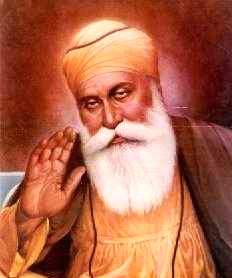
Sri Guru Nanak Dev ji was born in 1469 in Talwandi, a village in the Sheikhupura district, 65 kms. west of Lahore. His father was a village official in the local revenue administration. As a boy, Sri Guru Nanak learnt, besides the regional languages, Persian and Arabic. He was married in 1487 and was blessed with two sons, one in 1491 and the second in 1496. In 1485 he took up, at the instance of his brother-in-law, the appointment of an official in charge of the stores of Daulat Khan Lodhi, the Muslim ruler of the area at Sultanpur. It is there that he came into contact with Mardana, a Muslim minstrel (Mirasi) who was senior in age
By all accounts, 1496 was the year of his enlightenment when he started on his mission. His first statement after his prophetic communion with God was "There is no Hindu, nor any Mussalman." This is an announcement of supreme significance it declared not only the brotherhood of man and the fatherhood of God, but also his clear and primary interest not in any metaphysical doctrine but only in man and his fate. It means love your neighbour as yourself. In addition, it emphasised, simultaneously the inalienable spirituo-moral combination of his message. Accompanied by Mardana, he began his missionary tours. Apart from conveying his message and rendering help to the weak, he forcefully preached, both by precept and practice, against caste distinctions ritualism, idol worship and the pseudo-religious beliefs that had no spiritual content. He chose to mix with all. He dined and lived with men of the lowest castes and classes Considering the then prevailing cultural practices and traditions, this was something socially and religiously unheard of in those days of rigid Hindu caste system sanctioned by the scriptures and the religiously approved notions of untouchability and pollution. It is a matter of great significance that at the very beginning of his mission, the Guru's first companion was a low caste Muslim. The offerings he received during his tours, were distributed among the poor. Any surplus collected was given to his hosts to maintain a common kitchen, where all could sit and eat together without any distinction of caste and status. This institution of common kitchen or langar became a major instrument of helping the poor, and a nucleus for religious gatherings of his society and of establishing the basic equality of all castes, classes and sexes.
W
hen Guru Nanak Dev ji were 12 years old his father gave him twenty rupees and asked him to do a business, apparently to teach him business. Guru Nanak dev ji bought food for all the money and distributed among saints, and poor. When his father asked him what happened to business? He replied that he had done a "True business" at the place where Guru Nanak dev had fed the poor, this gurdwara was made and named Sacha Sauda.